The PRIMO Playbook: Mastering the Art of Negotiation with Vietnamese Suppliers

Vietnam has become a manufacturing powerhouse, attracting global brands with its strategic location, skilled workforce, and competitive pricing. However, securing favorable terms and building a sustainable supply chain requires more than just a strong contract—it demands a deep understanding of Vietnamese business culture.

In Vietnam, negotiation is an extension of relationship-building. While Western business often prioritizes the transaction, Vietnamese partners prioritize trust.

PRIMO Sourcing has spent over a decade navigating this unique landscape. This guide provides the cultural intelligence and strategic steps necessary to successfully negotiate with Vietnamese suppliers and forge long-term partnerships.


1. The Foundation: Understanding Vietnamese Business Culture

Success in sourcing in Vietnam is built on respect (ton trọng) and harmony (hòa thuận). Ignoring these core values is the fastest way to derail a negotiation.

The Primacy of Relationships (Quan Hệ)

Unlike the purely transactional focus often found in Western markets, business in Vietnam is rooted in relationships. Time spent building rapport before discussing prices is not wasted; it is an essential investment.

  • Trust First: Suppliers will extend better terms, flexibility, and priority to partners they know and trust. Your first few orders are often viewed as an investment in a future relationship, not just a one-off profit opportunity.
  • Social Investment: Expect initial meetings to include small talk about family, local culture, and personal interests. Participate genuinely—these moments are critical for establishing mutual respect.

The Art of Indirect Communication and Saving Face

Vietnamese suppliers place immense value on preserving “face” (thể diện)—both yours and theirs. This leads to an indirect communication style designed to maintain harmony and avoid confrontation.

Communication StyleWhat It MeansPRIMO Strategy
“That will be difficult.”A diplomatic, subtle way of saying “No.”Reframe the request, offering alternatives or compromises instead of pushing.
Silence after a proposal.The supplier is consulting with senior decision-makers or processing the request internally.Be patient. Never press for an immediate answer, as this violates hierarchy and damages face.
Focus on “improvement” (vs. “defect”).When discussing quality issues, language is softened to avoid blaming the factory.Frame issues as collaborative opportunities (“How can we standardize this process?”)

Navigating Hierarchical Decision-Making

Vietnamese companies typically operate with clear, hierarchical decision-making structures. The representative you negotiate with may not have the final authority.

  • Negotiation Cycles: Be prepared for longer negotiation cycles. Final pricing, favorable terms, and major contract clauses often require approval from company owners or directors.
  • Set Realistic Timelines: Pushing for immediate commitments from mid-level managers will only cause internal stress and likely result in unfulfilled promises. Always bake buffer time into your project schedules.

2. Negotiation Tactics for Favorable Terms

Your approach to pricing and contract terms should demonstrate a commitment to a mutual, long-term partnership.

Pricing and Value Negotiation

Avoid treating price as the only variable. In Vietnam, a lower price often means a compromise on quality, materials, or priority status.

  • Focus on TCO (Total Cost of Ownership): Negotiate on terms like payment structure, quality control inclusion, packaging upgrades, and order consistency, not just the unit price.
  • Anchor High on Commitment: Offer a larger annual forecast or a longer contract duration in exchange for a better unit price. Suppliers value reliable, consistent volume over a single, large order.
  • Justify Price Reductions: When asking for a price decrease, frame it around cost savings you can provide (e.g., using a standardized color palette, simplifying packaging) rather than simply demanding a lower number.

The Flexibility Advantage

Vietnamese suppliers value flexibility and pragmatic problem-solving. Use this to your advantage in creating “win-win” scenarios.

What NOT to DoWhat TO Do
Issue Ultimatums: “If you can’t hit this price, we walk.”Propose Solutions: “We can meet you halfway on price if you accept a 15% increase in lead time.”
Criticize Publicly: Point out flaws or mistakes in a group setting.Provide Feedback Privately: Address quality issues gently, focusing on collaborative solutions and shared standards.
Demand Immediate Answers: Press for a signature during the first meeting.Respect the Process: Allow time for internal discussions and senior approval (the negotiation cycles).

3. The PRIMO Advantage: Bridging the Cultural Divide

Even with the best intentions, language barriers and differing cultural expectations can derail crucial negotiations. PRIMO Sourcing acts as your essential cultural and logistical mediator.

Bridging Language Barriers and Technical Gaps

We ensure that technical requirements and contract terms are perfectly understood, preventing costly production errors that result from ambiguous communication.

  • Bilingual Expertise: Our local team provides professional translation for technical specifications, contracts, and quality documents, ensuring legal and technical clarity.
  • Structured Communication: We craft all communication to maintain the necessary diplomatic and respectful tone, preventing accidental offense that could sour the relationship.

Aligning Expectations for Quality and Timelines

We proactively mediate to align different cultural perceptions of what constitutes acceptable “quality” or a “reasonable” delivery timeline.

  • Precision Specs: We translate your requirements into detailed Product Requirement Briefs (PRBs) that leave no room for interpretation by the factory floor.
  • Cultural Mediation: We help suppliers understand Western expectations for rigid delivery schedules and provide buyers with realistic timelines that account for local customs (like the Tet holiday).

Elevate Your Negotiation: Partner with PRIMO Sourcing

Successful negotiation with Vietnamese suppliers requires patience, respect, and deep cultural intelligence. By investing in relationships and understanding the local dynamic, international buyers can achieve favorable terms and establish long-term partnerships.

PRIMO Sourcing provides the essential bridge, leveraging our decade of local experience and established relationships to secure the best outcomes for your business.

Ready to transform your negotiations into lasting partnerships?Contact PRIMO Sourcing Today at Kelly@primovn.com to discuss your sourcing strategy in Vietnam.
Share this:

The Ultimate Guide to Sourcing Rattan and Wicker Suppliers in Vietnam: Navigating Natural Fiber Manufacturing for Global Brands

The demand for sustainable, handcrafted homeware has never been higher, solidifying rattan and wicker as perennial favorites in global furniture and décor markets. Vietnam has cemented its position as the premier global hub for natural fiber manufacturing, offering unparalleled quality, craftsmanship, and production capacity.

For brands looking to successfully integrate these beautiful, eco-friendly materials into their collections, navigating the Vietnamese supplier landscape is the crucial first step.

As your trusted sourcing partner, PRIMO Sourcing has compiled this comprehensive guide to help you find and vet the very best rattan and wicker suppliers in Vietnam.

Why Vietnam Leads the Rattan and Wicker Industry

Vietnam is not merely a manufacturing location; it is a center of centuries-old artisan traditions. This combination of heritage and modern export capacity makes it the top choice for sourcing rattan products Vietnam.

Key AdvantageDetail
Global Export PowerThe country consistently ranks among the top global exporters of rattan, bamboo, and natural fiber products, moving hundreds of millions of dollars worth of goods annually.
Material DiversitySuppliers work with a rich variety of natural materials beyond just rattan and wicker, including seagrass, water hyacinth, bamboo, jute, and palm leaf.
Artisan ExpertiseThe industry is built upon a vast network of traditional craft villages (làng nghề) where specialized skills are passed down through generations, ensuring superior quality and unique designs.
Ethical SourcingAn increasing number of manufacturers are adopting sustainable forestry and processing methods, offering valuable certification options for conscious global brands.

Key Production Hubs: Where to Find Rattan and Wicker Manufacturers in Vietnam

Vietnam’s production is highly regionalized. Knowing the main clusters can significantly streamline your search for the right rattan furniture manufacturers Vietnam.

  1. Hong River Delta (Northern Vietnam):
  • Specialty: Known for a high concentration of traditional craft villages and a long history of production, specializing in fine wicker, lacquer, and combined materials. Ideal for intricate, high-value handicrafts and small accessories.
  • Provinces: Hanoi, Ha Nam, Thai Binh.
  1. Southeast Region (Southern Vietnam):
  • Provinces: Ho Chi Minh City (HCMC), Binh Duong, Dong Nai.
  • Specialty: This area benefits from excellent logistics, proximity to HCMC ports, and a focus on larger-scale poly rattan furniture and outdoor collections. Suppliers here often have more experience with mass production and direct export logistics.
  1. North Central Coast:
  • Provinces: Nghe An, Thanh Hoa.
  • Specialty: Primarily focused on raw material processing and some larger factories that act as crucial input suppliers for finished goods manufacturers across the country.

High-Demand Products: Top Rattan and Wicker Items to Source for Export

This list covers the products that are most popular in international markets, representing key opportunities for global brands.

1. Rattan and Wicker Furniture

These items represent the highest-value products in the rattan export market.

  • Seating: Rattan Chairs (Armchairs, Dining Chairs, Lounge Chairs), Rattan Bar Stools, Wicker Sofas and Loveseats, Hanging Rattan Chairs, Rattan Rocking Chairs.
  • Tables & Sets: Rattan Coffee Tables, Wicker Dining Sets, Rattan Side Tables.
  • Bedroom & Patio: Rattan Bed Frames, Rattan Headboards, Wicker Outdoor Patio Furniture, Rattan Garden Furniture, Sunbeds and Daybeds.

2. Baskets, Storage, and Accessories

Storage solutions are perennial best-sellers, known for their versatility and high sales volume.

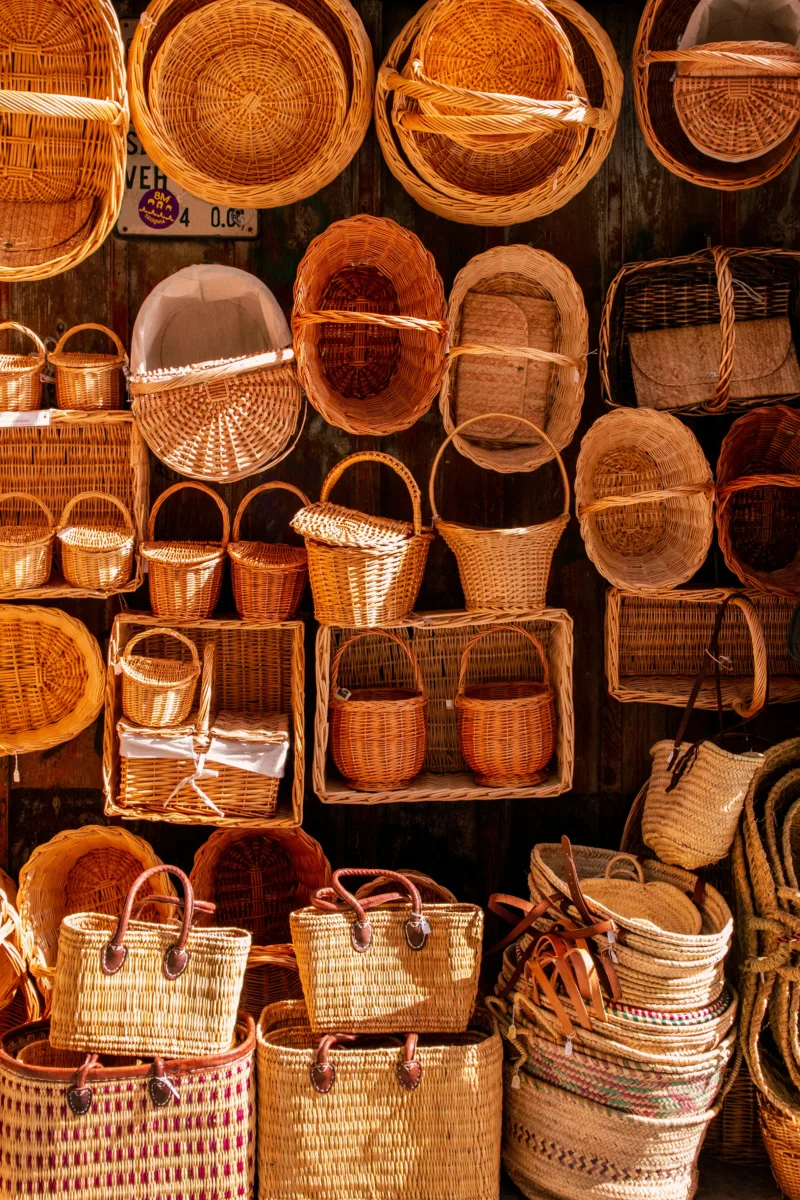
  • Storage & Laundry: Rattan Storage Baskets, Woven Storage Bins, Wicker Laundry Hampers (with Lids).
  • Dining & Decor: Handwoven Rattan Trays, Decorative Rattan Round Tray, Rattan Placemats, Wicker Charger Plates, Rattan Lampshades, Rattan Wall Mirrors.
  • Personal: Rattan Handbags, Woven Rattan Purses.

PRIMO’s 5-Point Vetting Checklist for Rattan and Wicker Suppliers

Finding a supplier is easy; finding a reliable, quality supplier is where the challenge lies. Use this checklist to screen potential rattan suppliers Vietnam.

Vetting PointPRIMO Actionable Insight
1. Material Provenance & QualityCheck: Does the supplier use imported or locally sourced rattan? Insist on testing certificates for materials (e.g., moisture content) to prevent cracking or mold issues upon arrival in your market.
2. Production Capacity & WorkforceCheck: Do they handle production in-house, or do they heavily rely on outsourced trade villages? Factories with an in-house Finishing & QC team, even if they outsource weaving, offer better control over the final product (e.g., paint, lacquer, metal frames).
3. Frame Construction & DurabilityCheck: For furniture, the quality of the internal frame (often steel, aluminum, or wood) is as important as the weaving. Request detailed specs on frame material gauge, welding quality, and anti-rust/powder coating processes.
4. Ethical & Environmental ComplianceCheck: Do they have necessary export permits for raw materials? Can they provide evidence of fair labor practices? Brands focused on sustainability must confirm the origin and legality of the forest products being used.
5. Packaging and Logistics ExpertiseCheck: Rattan is bulky and fragile. Experienced suppliers will have tested, robust packaging methods (e.g., multi-layer wrapping, corner protectors, reinforced cartons) specifically designed for LCL/FCL ocean freight to your target market (e.g., US or EU).

Overcoming Common Sourcing Challenges

ChallengePRIMO Sourcing Solution
Inconsistent QualityImplement a Pre-Shipment Inspection (PSI) focused specifically on weaving tension, color consistency, and dimension accuracy (rattan/wicker are harder to standardize than wood/metal).
Shipping DamageRequire suppliers to provide ISTA 3A/6A Test Reports for their packaging. Always specify fumigation requirements for wood/bamboo components to meet international import regulations.
Communication BarriersUtilize a local sourcing agent (like PRIMO Sourcing) who understands the nuances of the Vietnamese business culture and can translate technical requirements accurately to the factory floor.
Rising Raw Material CostsPartner with suppliers who have long-term contracts with raw material collectors or processors. This minimizes price volatility and ensures consistent input availability.

Partner with PRIMO Sourcing for Seamless Vietnam Rattan Sourcing

Navigating the vibrant, but complex, landscape of natural fiber manufacturing in Vietnam requires more than just a list of names—it requires local expertise.

PRIMO Sourcing specializes in connecting global brands with fully vetted, high-quality wicker manufacturers Vietnam that align with your ethical and quality standards. From initial factory audit and product development to comprehensive quality control and logistical management, we streamline your entire supply chain.

Ready to elevate your collection with authentic Vietnamese craftsmanship?Contact PRIMO Sourcing Today at Kelly@primovn.com to discuss your next rattan and wicker project.

Share this:

Exports from Vietnam in first quarter of 2021

A new report citing data from the General Department of Vietnam Customs shows that Vietnamese exports have seen an 18 percent on-year growth to reach nearly US$10 billion in the first quarter of 2021.

According to the report, the signing of the EU-Vietnam Free Trade Agreement (EVFTA) plays a large role in the increase of the country’s exports to the EU, and the best performing sectors in the first quarter include textile, clothing, electronics, agricultural and fishery products.

Read more
Share this: